County health department issues flood safety guidance
Montezuma County Public Health set out what it wants residents to do about floodwater, septic systems, private wells, food and cleanup. It says it can help people locate a septic tank, get a well-test kit or arrange a tetanus booster.
The following is a news release from Montezuma County Public Health, posted to the county’s website on November 2, 2026. One word appears to have been dropped from the septic section of the county’s own text; the missing word is marked in brackets.
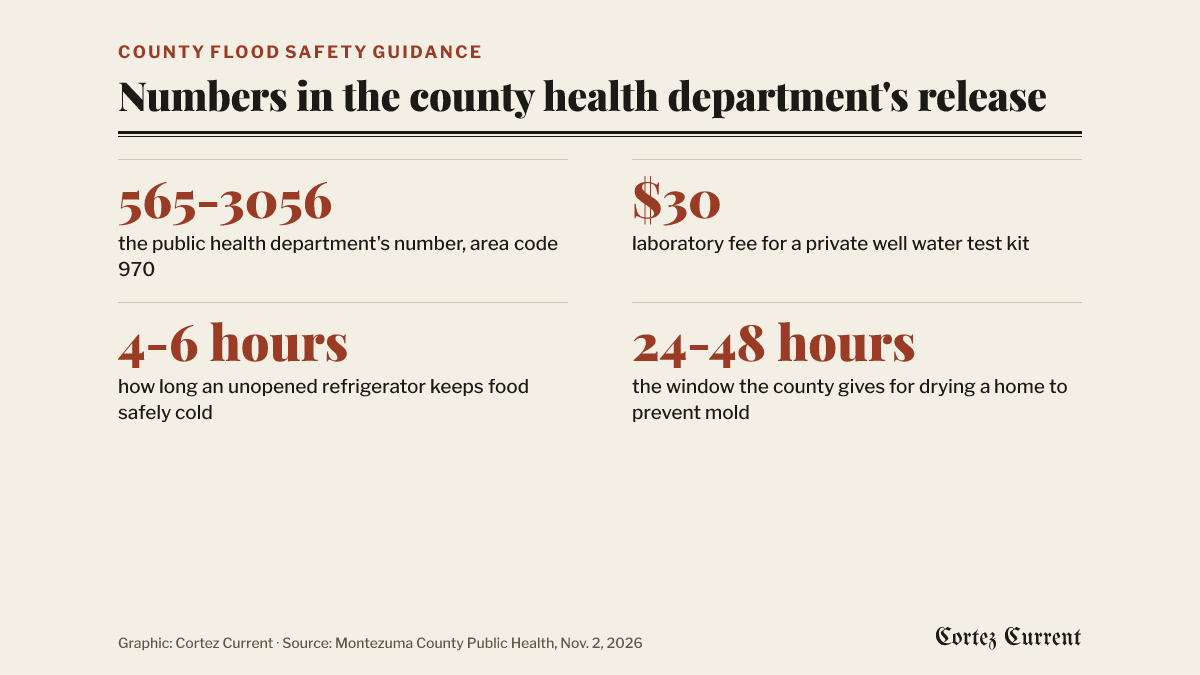 Graphic: Cortez Current. Source: Montezuma County Public Health
Montezuma County Public Health — Flood Safety: Protecting Your Family, Home & Health
Floodwaters can contain sewage, harmful bacteria and viruses, chemicals, and debris that can pose health risks to you, your family, and your pets. Even after floodwaters recede, contamination may remain.
Montezuma County Public Health encourages residents to take the following precautions to protect their health and safety.
Floodwater Safety
Avoid Contact with Floodwaters. Do not walk, swim, or allow children or pets to play in flooded areas. Avoid rivers, streams, and lakes affected by flooding.
Wash Exposed Pets. If your pet has come into contact with potentially contaminated floodwater, wash them thoroughly with clean water.
Wash Exposed Skin and Hands. Clean any skin exposed to floodwater with soap and clean water as soon as possible. Wash hands frequently, especially before eating or preparing food.
Clean Contaminated Items. Wash clothing and household items that may have been exposed to floodwater. Discard items that cannot be safely cleaned and disinfected.
Protect Cuts and Wounds. Keep cuts and scrapes covered with waterproof bandages. Thoroughly clean wounds exposed to floodwater. Watch for signs of infection, including redness, swelling, or increasing pain. Seek medical attention for deep cuts, puncture wounds, or injuries involving debris.
Consider a Tetanus Booster. If you have sustained an injury or may be overdue for a tetanus vaccination, contact your healthcare provider. Montezuma County Public Health can help residents access a booster. Call (970) 565-3056.
Watch for illness. Contact a healthcare provider if you develop fever, vomiting, diarrhea, or stomach cramps after exposure to floodwater.
Septic System Safety
Flooding can temporarily affect [septic] systems. Do not assume your system has failed simply because the area is saturated.
Need help locating your septic tank? Montezuma County Public Health can help you locate your tank if you are unsure where it is.
Allow the area to dry out. Wait for floodwaters to recede and groundwater levels to drop before determining whether your system is failing. You may need to limit water use to help the area dry out.
Do not pump your tank too soon. Pumping while groundwater levels are high can cause an empty tank to float, shift, or become damaged due to surrounding water pressure.
Seek professional assistance. Contact a qualified septic system professional if you believe your system has been damaged or compromised.
See the attached septic system flyer for additional information.
Private Well Water Safety
Flooding can contaminate private wells with bacteria and other harmful substances. If your well has been submerged or surrounded by floodwaters, do not assume your water is safe to drink.
Wait for Floodwaters to Recede. Do not use or test a well while it is actively submerged or surrounded by floodwaters. Use a safe alternative drinking water source until the well has been properly inspected, disinfected, and tested.
Recommended Steps for Restoring Your Well
- Turn off power. Shut off electricity to the well before any inspection or repair work. Have a qualified professional handle electrical components.
- Have the well inspected. Contact a qualified well or pump contractor to inspect the well and determine whether pumping, cleaning, and disinfection are needed.
- Disinfect the well. A qualified professional can shock-chlorinate the well and associated plumbing to address bacterial contamination.
- Flush the system. Follow the contractor’s instructions for flushing chlorine from the well and plumbing.
- Test your water. Collect a sample after disinfection and flushing, following the laboratory’s instructions for proper timing and collection.
- Conduct follow-up testing. If the initial test is satisfactory, consider testing again in 2-4 weeks to confirm the water remains safe.
Water Testing Through Montezuma County Public Health
Montezuma County Public Health has private well water testing kits available for residents. Kits can be picked up at the Health Department. Samples can be mailed directly to the laboratory in Durango or delivered. The laboratory testing fee is $30 per test kit. Please wait until floodwaters have receded and your well has been properly addressed before collecting a sample.
Food Safety After Flooding
When in doubt, throw it out!
Refrigerator Safety. An unopened refrigerator will generally keep food safely cold for approximately 4-6 hours. If your refrigerator has been exposed to floodwater, food safety may be compromised even if the power remains on. Discard food that has come into contact with floodwater.
Freezer Safety (if unopened). A full freezer can maintain its temperature for approximately 48 hours. A half-full freezer can maintain its temperature for approximately 24 hours.
Important: Never taste food to determine whether it is safe. Discard food that may have been contaminated by floodwater, including food stored in packaging that is not waterproof.
Flood Cleanup: Important Safety Tips
1. Protect Yourself. Wear waterproof boots, gloves, and eye protection. Use an N95 mask when exposed to mold or dust. Keep children and pets away from flooded areas. Wash hands and exposed skin frequently with soap and clean water.
2. Make Sure Your Home Is Safe. Do not enter damaged buildings until they are safe. Have electrical systems inspected before turning power back on. Never use generators, grills, or fuel-powered equipment indoors or in garages due to carbon monoxide risk. Watch for structural damage, gas leaks, and exposed electrical wires.
3. Clean and Disinfect. Remove standing water, mud, and debris when safe. Discard wet carpeting, mattresses, insulation, and other materials that cannot be properly cleaned and dried. Clean hard surfaces with soap and water, then disinfect. Never mix bleach with ammonia or other cleaning products.
4. Prevent Mold. Dry your home as quickly as possible, ideally within 24-48 hours. Use fans and dehumidifiers when electricity is safe. Remove wet materials that cannot be dried. Check for hidden moisture behind walls, cabinets, and flooring.
Need Help or Have Questions?
Montezuma County Public Health Department, (970) 565-3056. We can help residents with: locating septic tanks; accessing private well water testing kits; tetanus booster information and access; public health questions related to flooding.
Please reach out if you have questions or need assistance.
The release is on the county’s website as “Montezuma County Public Health Flood Safety: Protecting Your Family, Home & Health”. The septic flyer the release refers to is not attached to the web version.