Dolores adopts 2024 building codes and plans a flood workshop
Trustees passed the new codes unanimously Monday night and approved the 2027 sheriff's contract and $10,000 for senior services. Most of the meeting went to the Nov. 1-2 flood, which the town manager compared to a flood in 1911.
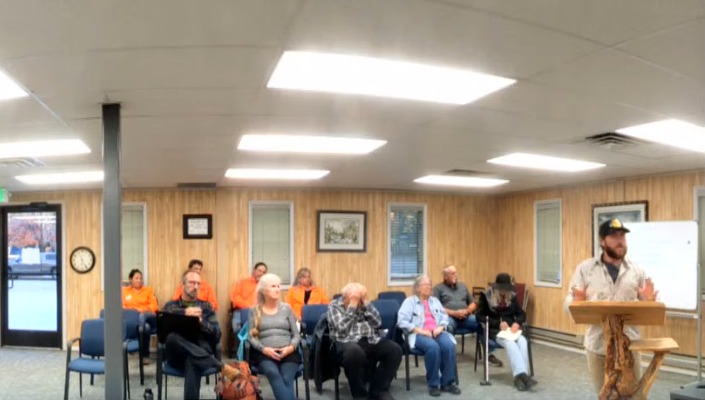
The Dolores Board of Trustees adopted a new set of building codes for the town on Monday, November 9, approved its 2027 contract for sheriff’s coverage, and spent most of a 90-minute meeting on the flood that went through the southeast side of town on November 1 and 2.
The Cortez Current previewed the meeting last week. This account is from the town’s video of the meeting and the minutes the town posted on Tuesday. Trustee Bill McCoy was absent; the mayor and the other four trustees were present.
The building codes
Ordinance No. 594, Series 2026, passed on second and final reading by a unanimous roll call, after a public hearing that the minutes record as opening at 6:38 p.m. and closing at 6:43 p.m. Mayor Pro Tem Chris Curry moved it and Trustee Derek Beckman seconded.
The ordinance amends Chapter 15.04 of the Dolores Municipal Code to adopt the 2024 International Code Council codes — building, residential, fuel gas, plumbing, mechanical, existing building, property maintenance, fire and energy conservation. The agenda gives an effective date of January 1, 2027.
The town’s building official told the board that Dolores is moving from the 2021 codes to the 2024 ones, a three-year jump where most places update every six. The point, he said, is to get back on the same even-year codes as Durango, Telluride and other neighbors, and to stay on a six-year cycle after that.
He tied the codes to the flood. Newer buildings that the code had required to have flood vents, or to be raised out of the flood plain on fill, did not flood, he said. He offered to visit anyone whose building was damaged and whose insurer wants a building official to confirm it.
Asked about the trailer park, he said factory-built homes come with their own state certification and their installation is regulated by the state; the town’s code covers the water, sewer and electric connections to them. He said the town no longer permits pre-1972 mobile homes to be moved into town.
One resident asked during the hearing whether the ordinance would bring in triple-pane windows. The answer was no: that requirement belongs to the state’s wildfire code, which the board voted down on first reading in September, and the 2024 energy code still calls for double-pane.
The three resolutions
All three passed unanimously on voice votes, according to the minutes.
- Resolution 728 approves the 2027 law enforcement services agreement with the Montezuma County commissioners and the Sheriff’s Office. The agenda put it at $143,000 for the year, for 40 hours a week of directly committed service. The town attorney told the board it is essentially the same contract as last year’s. Trustee Josh Maule moved it and Trustee Marie Roan seconded.
- Resolution 727 sends $10,000 from the town’s 2027 budget to Montezuma County Senior Services. Roan moved it and Beckman seconded.
- Resolution 729 reappoints Town Manager Leigh Reeves as the town’s representative on the Region 9 Economic Development District board for 2027 and 2028. Beckman moved it and Curry seconded.
The consent agenda — the October 26 minutes and the October check register — passed unanimously at the start of the meeting.
What the town manager said about the flood
Reeves opened the meeting with an account of the storm, she said because “there’s lots of stories out there.” (The Current reported the flood as it happened.)
She said the town took about four inches of rain in about 18 hours, and that the river reached a level the town had not seen since 1911. The river did not come over the berm in town, she said. It broke out about three-quarters of a mile upstream, in the county, on a curve beyond the end of the berm the Army Corps of Engineers built, and the water ran across properties and into the southeast part of town.
She said a riverside business that had cut trees along the bank had been blamed for the flooding, and that it was not the cause.
Two town staff worked through the night, she said, and crews protected the town’s water headgate and sewer treatment plant, which she said was their first job. Dolores did not need a boil-water order. “We still have water,” she said.
She was blunt about one gap. At some point, she said, “the emergency system went down,” so “there was not a lot of pre-evacuation notice,” and staff and officers went door to door instead. She said that was not anyone’s fault but is “one area that we could really improve.”
The Army Corps of Engineers met with her on Saturday, she said, and two people from FEMA are in town this week. The corps is gathering the lie of the land up the river to work out what could be done. She said she has a link residents can use to record what happened, with pictures, which helps FEMA and the corps put a plan together.
The sheriff’s office
The sheriff’s office report put it slightly differently: it said pre-evacuation and evacuation notices did go out through Everbridge, the county’s alert system, and urged everyone to sign up for it. It said water also came out of the river north and east of town near County Road 37, where it said about five homes came close to flooding.
It suggested the town put up an electronic message board, perhaps at Flanders Park, so that residents without smartphones or landlines can see real-time emergency information, and offered to help look for grant money for one. The minutes record the recommendation.
Residents and trustees
Several residents spoke during public comment. Neighbors on 18th Street described water running into their yards and asked the town to maintain a nearby ditch and regrade the road and alley; their photos are going into the November 23 packet, according to the minutes. Others thanked the town’s crews. One resident who said she works on infrastructure risk urged the town to do an after-action review, check where its alerts failed, and map which homes and streets are at risk at different river levels. Two more asked the board to treat the Dolores Community Center as a community asset rather than a business. The mayor reminded speakers that public comment is not a conversation and that the town would answer through the town manager.
In their reports, trustees came back to the flood. Mayor Chris Holkestad proposed a workshop in the next couple of months on spring runoff and flood readiness, including where sandbags are kept and how the town works with the county, and the board agreed. Maule said he wants a covered, organized sandbag and supply area set up over the winter. Beckman said volunteers who wanted to help did not know how, and asked for a plan that gives them a job.
The minutes record that flood planning, snow removal and a notice board were added to the board’s list of future agenda items, and that Flock cameras and Montezuma Search and Rescue’s request to use town land were taken off it. Roan reported that the search and rescue group is not yet ready to build.
Budget and what is next
The town treasurer told the board that sales tax collections have already reached the $863,000 the town budgeted for 2026, and that the 2027 budget gets its first reading on November 23 and its second reading, with the mill levy, on December 14.
The board’s next regular meeting is November 23 at 5:30 p.m. at Town Hall, 601 Central Ave. It starts with a joint workshop with the Dolores Community Center Advisory Board on the center’s operations and finances, and the appointment to the board’s vacant trustee seat is also set for that night. Reeves said the FastTrack resolution will be on that agenda.
County Commissioner Jim Candelaria told the board that the county landfill would likely take green waste free of charge for a while to help with flood cleanup. The county commissioners were weighing that at their Tuesday meeting.
Sources: Town of Dolores Board of Trustees meeting video, November 9, 2026 (YouTube); minutes of the November 9 meeting; agenda packet. Figures said aloud at the meeting are attributed to the person who gave them. Members of the public who spoke are not named.