How pool and softball families can sell the golf course without waiting on the council
The city charter lets voters write their own ordinance. About 178 signatures sends a golf course sale to the April 2028 ballot. About 445 forces a special election within 90 days.
More than a dozen people spoke during public comment at the Nov. 24 council meeting, most of them about the outdoor pool. Others spoke up for the softball complex and its lights. Then the City Council passed the 2027 budget 7-0. It keeps the pool open one more summer, with reduced hours, and City Manager Drew Sanders called it “a one-year solution.”
Those families do not have to wait for the council. The Cortez charter lets voters write their own ordinance. If the council will not adopt it, the voters decide it themselves.
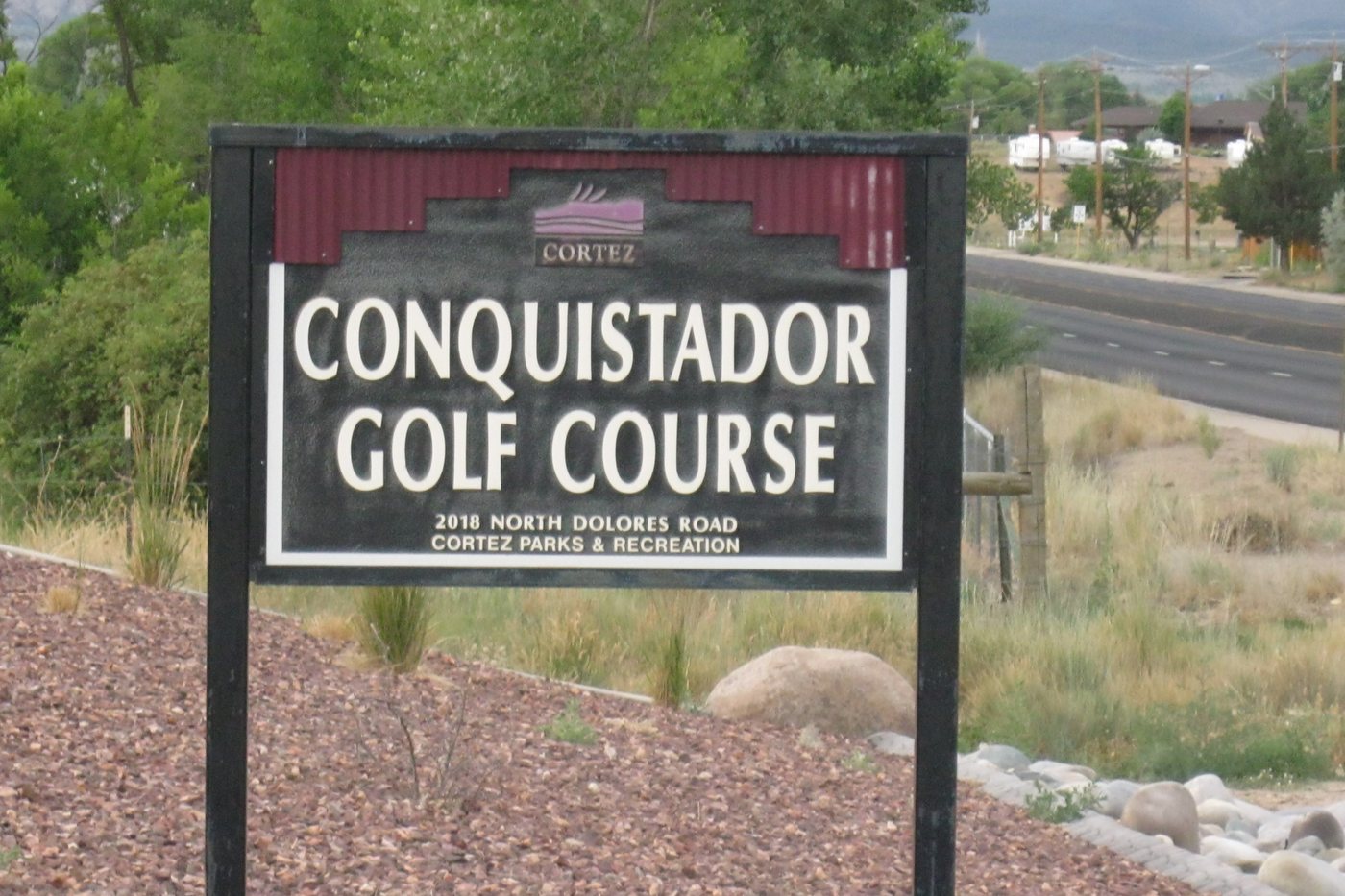
The city owns 154 acres on North Dolores Road that it runs as a golf course, at a loss. Selling that land is the one large pot of money within reach. Here is how a petition to sell it would work, how many signatures it takes, and what could stop it.
Golf loses about as much as the pool
By the city’s own numbers, the golf course costs taxpayers about as much each year as the pool does. The difference is that the course sits on 154 acres the city could sell.
| What | The number | Where it comes from |
|---|---|---|
| Golf course, 2027 budget | $854,927, or 5.2% of the general fund | City budget on ClearGov |
| Golf course, yearly shortfall | About $310,000 ($985,000 in costs, $675,000 in revenue) | Golf Advisory Committee minutes, Jan. 15, 2026 |
| Outdoor pool, 2027 budget | $320,468, or 1.9% of the general fund | City budget on ClearGov |
| Outdoor pool, yearly shortfall | $391,000 (about $477,000 in costs, $86,000 in fees) | City release, Oct. 20, 2026 |
| Outdoor pool, long-term repair | About $1.5 million | City release, Oct. 20, 2026 |
| South Softball Complex | About $1.4 million for electrical service and field and parking lot lights | The Journal, Feb. 2026 |
The golf shortfall is the city’s own 20-year forecast. Parks staff built it from year-end figures plus the cost of replacing equipment and other assets. The Golf Advisory Committee called it “eye-opening” in January.
Golf is also the city’s thirstiest park. When irrigation water ran short this summer, the council moved $294,000 from reserves to water parks with treated city water. Under that plan the golf course needed 2.4 million gallons a week. The rest of the parks needed 1.5 million, and the softball complex 200,000.
The pool is not optional. A $700,000 Great Outdoors Colorado grant from 2010 commits the city to run it for 25 years or the project’s useful life.
The ball fields have no such protection. They have been dark since the city shut off their failing electrical system in 2025. The Journal reported in February that the lights had burned out and fallen from their poles, and that an engineer warned the switchgear could explode.
What the land could bring
A land sale is one-time money, and the pool and ball fields have one-time bills. That is the fit. Closing the course also ends the yearly golf shortfall, which is close to what the pool loses each year.
The course sits mostly on one county parcel, No. 560918300005 at 2018 N. Dolores Road. The county’s parcel map lists the City of Cortez as owner, 153.86 acres, and a land value of $739,297. That is about $4,800 an acre. It is the assessor’s figure for tax-exempt open space, not a market price.
Nobody knows what the land would sell for as building ground. Two asking prices nearby give a rough yardstick:
- A 26.86-acre tract just south of the course, half of it already through planning and zoning with a sewer main in, has been listed at $574,900. That is about $21,400 an acre.
- A 473-acre fenced tract near the course is listed at $4 million, about $8,460 an acre.
At those prices the golf course land would come to roughly $1.3 million to $3.3 million. Those are asking prices for other land, not an appraisal. Still, that range brackets the $2.9 million the pool and the softball complex need. A sale near the top would cover both. A sale near the bottom would cover the pool.
That is why any petition should demand an independent appraisal and set a floor price. Two other facts shape the price:
- Zoning. The county map lists the parcel’s city zoning as “O,” the open district, which the city’s Land Use Code sets aside for open space and recreation. A buyer who wants to build homes would need the city to rezone it, which takes its own public hearings.
- Water. The course is irrigated with non-drinking water from Montezuma Valley Irrigation Co. The petition should say whether the city keeps those water shares for its other parks and the ball fields, or sells them with the land.
The sale would not run into the state’s tax limits. Colorado’s Taxpayer’s Bill of Rights leaves property sales out of the spending that counts against a city’s limit.
Voters can write the ordinance themselves
Article XII of the Cortez City Charter lets voters submit any proposed ordinance to the council by petition. The council then has 20 days to adopt it word for word. If it does not, the ordinance goes to the voters in the form the petition proposed.
The charter hands the paperwork to state law “as far as applicable.” Today that is the state’s municipal initiative law, which applies unless a city has set its own procedures by charter or ordinance. The Current found no such ordinance in the Cortez city code. Put together, the main requirements are:
- Clerk approval first. The city clerk approves or rejects the petition form within five business days. Nobody may print or circulate a petition before it is approved.
- What each petition section must carry. A warning, a summary written by the clerk, the full text of the ordinance, two named representatives of the proponents, and a notarized affidavit from the circulator.
- A ballot title and a committee. The charter requires a short ballot title and a committee of three signers with power to fix it. The council can refuse a title that is too long, misleading or ambiguous unless the committee revises it.
- Who circulates. Circulators must be at least 18 and must carry the petition in person.
- Who signs. Only registered voters who live inside the Cortez city limits. Each signs for themselves and writes their own address.
- How long. State law gives 180 days after approval to file the signed petition.
Online names do not count. The 1,600-plus signatures on the Change.org pool petition would have to be gathered again, on paper, from city voters.
The city clerk, Danielle Wells, is the person to call first: 970-565-3402. Ask her which state rules she will apply where the charter is silent. The charter was written in 1957 and still cites a 1973 statute.
How many signatures it takes
The charter counts signatures against turnout, not against the voter rolls. That makes the bar low in Cortez, where few people vote in city elections.
The regular route: about 178 signatures. A petition needs signatures equal to 10% of the ballots cast in the city at the last general municipal election. That was April 7, 2026. The city mailed nearly 6,000 ballots and received 1,780, by the unofficial count. Ten percent is 178. If the council will not adopt the ordinance, it goes to the next city election at least 60 days after filing. The next scheduled city election is April 4, 2028.
The fast route: about 445 signatures. If the petition asks for a special election and carries signatures equal to 25% of those ballots, the clock speeds up. The council must adopt the ordinance within 20 days or call a special election within 30 days. That election must be held 60 to 90 days after the petition is filed. If another city or general election falls in that window, the measure can go on that ballot instead.
One limit: the charter bars any special election within three months before a general city election. No special election can be held from early January until the April 4, 2028, election.
Collect far more than the minimum. The 1,780 figure is the unofficial count of ballots received, so ask the clerk for the certified number before you start. Signatures get thrown out for wrong addresses, unregistered signers and people who live outside city limits. A drive that stops at 445 is likely to fall short.
A sturdier route: amend the charter
Voters can also amend the charter itself by petition under state law. That bar is set against registered voters, so it is higher. The petition starts with a statement of intent signed by five registered voters, and the circulators then have 90 days.
| Route | Signatures required | Roughly | When voters decide | Can the council undo it? |
|---|---|---|---|---|
| Ordinance, next city election | 10% of April 2026 ballots | 178 | Next city election at least 60 days after filing (April 4, 2028) | Nothing found that stops a later council from amending it |
| Ordinance, special election | 25% of April 2026 ballots | 445 | Special election 60 to 90 days after filing | Same |
| Charter amendment, regular election | 5% of registered voters | 300 | Next regular election; file at least 90 days ahead | No; only voters change the charter |
| Charter amendment, special election | 10% of registered voters | 600 | Special election; file at least 90 days ahead | No |
The charter figures assume about 6,000 registered voters, the number of ballots the city mailed in April. The clerk sets the exact count on the day the statement of intent is filed.
The ordinance is cheaper to qualify. The charter amendment is harder to undo, because no later council can change it without another vote of the people. That trade-off is the first decision supporters have to make.
What the petition could say
Below is model language for the ordinance route. It is a starting point to take to a lawyer, not legal advice. Brackets mark choices supporters have to make.
Ballot title: Shall the City of Cortez sell the Conquistador Golf Course at no less than its appraised fair market value and use the net proceeds only to repair the Cortez Municipal Outdoor Pool and to light and improve the South Softball Complex?
[For a special election only] The petitioners request that this ordinance be submitted at a special election under Article XII, Section 1 of the Cortez City Charter.
AN ORDINANCE OF THE PEOPLE OF THE CITY OF CORTEZ, COLORADO, DIRECTING THE SALE OF THE CONQUISTADOR GOLF COURSE AND DEDICATING THE NET PROCEEDS TO THE MUNICIPAL OUTDOOR POOL AND THE SOUTH SOFTBALL COMPLEX
BE IT ORDAINED BY THE PEOPLE OF THE CITY OF CORTEZ, COLORADO:
Section 1. Policy. It is the policy of the City of Cortez to end its ownership and operation of a municipal golf course and to devote the value of that land to public aquatics and youth softball.
Section 2. Sale.
(a) The City shall sell the real property at 2018 N. Dolores Road known as the Conquistador Golf Course, Montezuma County parcel No. 560918300005, [and any adjoining City parcels used as part of the course].
(b) Before offering the property, the City shall obtain an appraisal by an independent Colorado-certified general appraiser.
(c) The City shall sell the property by a public, competitive process for no less than the appraised fair market value.
(d) The City shall offer the property for sale within [12] months after this ordinance takes effect. The City may operate the course until the sale closes.
Section 3. Pool and Softball Capital Fund.
(a) The Pool and Softball Capital Fund is created as a restricted fund.
(b) The net proceeds of the sale, after closing costs, shall be deposited in the fund.
(c) Money in the fund may be spent only for: (1) repair, renovation or replacement of the Cortez Municipal Outdoor Pool, 803 E. Montezuma Ave.; and (2) electrical service, field and parking lot lighting, and field improvements at the South Softball Complex on County Road G.2. [Optional: The pool shall be funded first, up to $____.]
(d) Interest earned stays in the fund.
(e) The City Manager shall report the fund’s balance and spending to the City Council in public each year.
Section 4. Water. [Choose one]
[A] The City shall keep the irrigation water shares used at the course and assign them to other City parks, including the South Softball Complex.
[B] The City may sell those water shares with the land, and the proceeds shall be deposited in the fund.
Section 5. Severability. If any part of this ordinance is held invalid, the remaining parts stay in effect.
Section 6. Effective date. This ordinance takes effect when approved by a majority of the voters voting on it, or on adoption by the City Council.
The petition sheets around that text need, at a minimum:
- The warning and the summary the clerk prepares.
- The names and addresses of two proponent representatives.
- A committee of three signers with power to revise the ballot title.
- Lines for each signer’s signature, printed name, address and date.
- A notarized circulator affidavit on every section.
The Current is not supplying a petition form. Organizers should have a lawyer turn this language into petition sheets and take them to the city clerk, who has to approve the form before anyone signs.
Four questions to settle before the first signature
1. Is selling the course “legislation”? This is the biggest risk. Colorado’s constitution reserves the initiative for legislation, not for running the city day to day. In 2013 the Colorado Supreme Court ruled that two Aspen initiatives could not go to the voters, in Vagneur v. City of Aspen. They tried to dictate a highway design across city-owned open space. The court called that administrative work, the management of city property.
The court’s tests ask whether a measure sets a general, lasting policy or just carries out existing policy case by case. A petition that only orders one parcel sold invites the same challenge. A petition that sets a policy, ending city golf and dedicating the land’s value to aquatics and youth softball, stands on firmer ground. That is why Section 1 of the model is a policy statement. It is no guarantee, and it is the first thing a lawyer should test.
2. Does a sale need a vote anyway? State law requires an election before a city sells land used or held for park purposes. Courts have said a home-rule city can skip that election when its own charter and ordinances give it the power. Colorado Springs had its own rules for selling city land. The Cortez charter says nothing specific about selling park land, and the Current found no such rules in the city code, which lists the golf course among the city’s parks. That makes it more likely the state’s election requirement applies here. Ask the city attorney. If a vote is required, the petition is how supporters get one.
3. What do the deeds and grants say? The assessor’s record cites three recorded deeds for the main parcel: Book 360, Page 99; Book 520, Page 753; and Book 593, Page 89. Pull them at the county clerk’s office and look for conditions, such as the land going back to the seller if it stops being a park. Then ask the city in writing whether any state or federal grant ever paid for the course. The pool’s 2010 grant shows why: the city says that one was not in its files until it came up in public discussion of the budget.
Water needs its own look. The charter bars selling water or other utility property without a vote of the people. Whether the golf course’s irrigation shares count is a question for the city attorney. Keeping the shares for other parks, Option A in the model, sidesteps it.
4. Can a later council undo it? The Current found nothing in the charter or the state initiative law that stops a future council from amending or repealing an ordinance the voters pass. The council also writes each year’s budget. A charter amendment closes that gap, at the price of more signatures.
From first draft to the ballot
Filed with 445 signatures, a sale can reach voters within 90 days. The steps:
- Draft it. A lawyer reviews the ordinance and the ballot title.
- Clerk approval. The clerk approves or rejects the form within five business days.
- Get signatures. From city voters only, within 180 days.
- File the petition. The clerk rules on the signatures within 30 days, and protests can be filed within 40.
- The council decides. If it adopts the ordinance within 20 days, the ordinance becomes law and no election is needed.
- If it does not, voters decide. With 445 or more signatures and a request for a special election, the vote comes 60 to 90 days after filing. With 178 or more, it goes on the April 4, 2028, city election ballot.
The charter starts the council’s 20-day clock, and the special election’s 60-to-90-day window, from the day the petition is filed. State law counts from the clerk’s final ruling on the signatures instead. Ask the clerk which clock she will use before setting a target date.
Timing matters for the pool. The 2027 budget keeps it open one more summer. A special election in 2027 would give the city time to sell the land and bid repairs before the 2028 season. The April 2028 route would not.
What golfers will say, and the answers
“The course makes money.” It brings in money. The Journal reported the course had taken in more than $400,000 by June this year. But income is not profit. The city’s own forecast has golf bringing in about $675,000 a year and spending about $985,000.
“It brings people to town.” It does. An April tournament drew more than 100 players, and golf committee members argue that low green fees bring in spending elsewhere. A sale does not have to end golf. Under the model ordinance, a golf operator could bid like anyone else. The city would simply stop paying the losses.
“We bought homes on the course.” Homes along Golf Course Lane and Fairway Drive back onto the fairways, and their owners have real stakes in this. Any change from open space to houses would need a rezoning, with public hearings where neighbors are heard. Supporters could also let buyers bid with the land restricted to golf or open space. That would protect the neighbors and lower the price.
“Once it’s sold, it’s gone.” That is true. It is also the best reason to let the voters decide, instead of the council.
“The pool loses even more.” It does lose somewhat more, about $391,000 a year against golf’s $310,000. But the city’s grant agreement commits it to keep the pool running for 25 years after its renovation, or for the pool’s useful life. The city can walk away from golf. It cannot walk away from the pool, or from the 6- to 14-year-olds who play on the softball fields.
The bar is lower than it looks
The families who filled the council chambers this fall have already shown they can organize. In two days in October, more than 1,600 people signed an online petition to save the pool. Forcing a special election takes about 445 signatures from city voters. That is fewer than a third of that online count.
The council has had its chance to find the money and has offered one summer at a time. The charter gives the people of Cortez another way. They should use it. Take this language to a lawyer, and then to the city clerk.
Author’s note: Charles P. Borchini Jr. is the publisher of the Cortez Current. He argued for selling the golf course in a Nov. 24 opinion piece. He is not a sponsor of any petition. He ran for City Council in April 2026 and served on the city’s Planning and Zoning Commission from November 2025 to September 2026. This piece is not legal advice; supporters should have a lawyer review any petition before circulating it.