County files its answer in Dollar General appeal; ruling likely next summer
The fight over a store at Highway 145 and County Road N is now in the Colorado Court of Appeals. It turns on a phrase the county is already working to rewrite out of its land use code: "use by right."
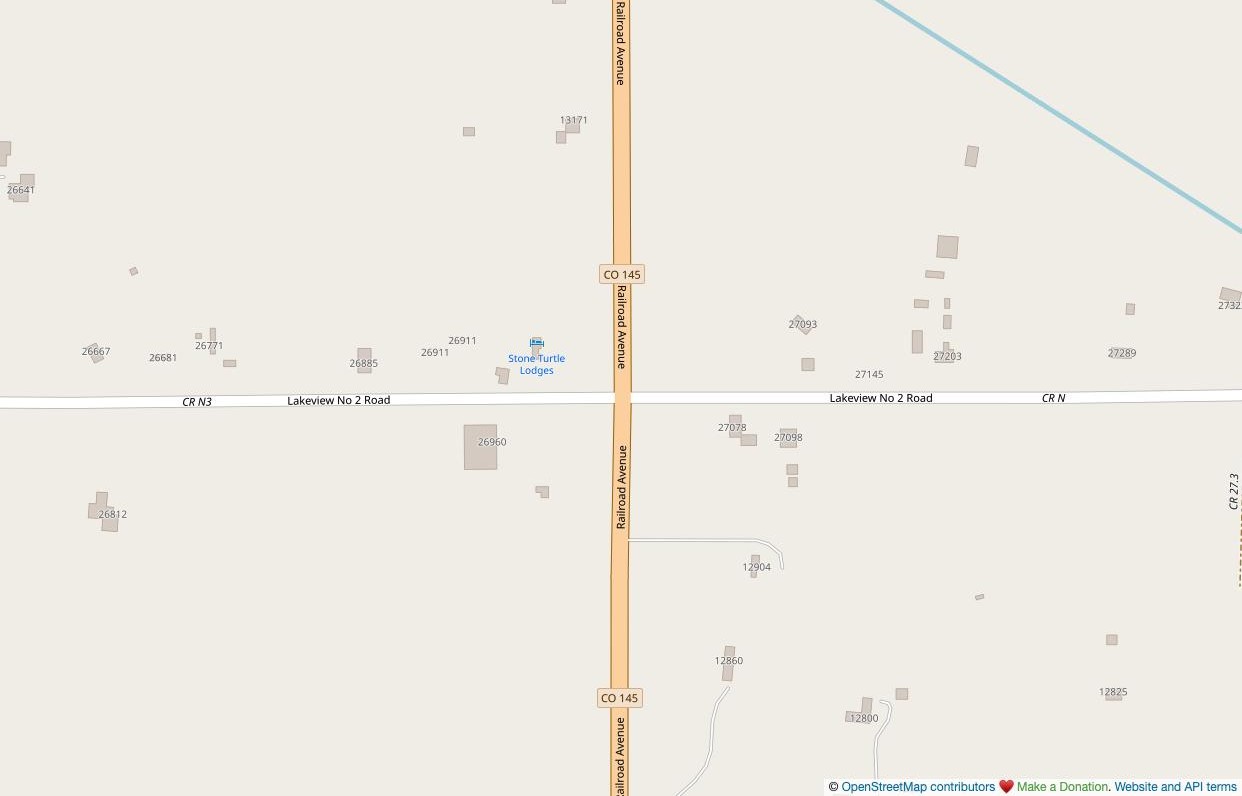
Montezuma County has filed its answer in the Colorado Court of Appeals in Leaf Properties’ challenge to the county’s denial of a Dollar General store at Highway 145 and County Road N, between Cortez and Dolores.
County Attorney Stephen Tarnowski told commissioners on Tuesday, Nov. 24, that he turned in the county’s answer brief the previous Friday, Nov. 20. Leaf Properties, the company that applied to build the store, now has 21 days to reply. That would put its deadline around Dec. 11 unless the court gives it more time. Tarnowski said there is “a good chance” the court will hear oral argument, and he estimated a decision would come around next summer.
That would be more than three years after the county’s Planning and Zoning Commission first took up the proposal in March 2024.
The briefs themselves are not available online, and the Current has not yet obtained either side’s. This story is drawn from the county’s own record of the case: its hearing minutes, the resolution denying the permit, its land use code, the recordings of its hearings and meetings, and what the county attorney has told commissioners in public.
Where the appeal stands
Leaf Properties is the party appealing. A district judge upheld the county’s denial in July, and on July 28 Tarnowski told commissioners he had received Leaf’s notice of appeal. Problems with the record sent up to the appeals court slowed the case in September, he said at the time.
Leaf’s opening brief arrived Friday, Oct. 16. Tarnowski told the board four days later that he had only skimmed it, but that it held “no surprises” and raised “kind of the same issues that we briefed” in district court. He said then that the county had about 35 days to answer. The Current noted the Nov. 20 filing in its account of the Nov. 24 meeting.
The question at the center: what ‘use by right’ means
The 3.78-acre parcel is zoned commercial and sits in a commercial overlay zone. The county does not dispute that. Its written decision, Resolution 10-2025, says retail sales is “a use-by-right in commercial zoning, but only to the extent the use by right does not exceed the County’s rural threshold standards.”
Those threshold standards are a table in the county’s land use code. The one that matters here is traffic: “Less than 15 vehicle round trips per day.” The county estimated the store would bring 678 vehicle trips each weekday. Counted as round trips, that is about 339, more than 20 times the threshold. A use that goes over a threshold needs a high impact permit, and the board decides those case by case. It must deny one, or approve it with conditions, if the project would cause “significant adverse impacts on other property in the area.”
Leaf Properties’ position from the start has been that a store on land already zoned for it should not need that permission. At the planning commission’s hearing in 2024, Douglas Kinsey, who has appeared for Leaf at each of the county’s hearings, said Dollar General was not buying the land. “It’s my land,” he said. He told the commission, “I bought this piece of land because of your land development code. It’s zoned commercial and this is a use that’s allowed in that zoning, so it is my right to build something for that use.”
The code’s own wording gives that argument something to work with. Its definition of a high impact development describes a project “that is not a use-by-right through zoning” which exceeds the threshold standards, including any commercial use generating 15 or more vehicle round trips a day.
Tarnowski explained the county’s reading to commissioners in July. The phrase “isn’t defined anywhere in state law,” he said, and the county’s code does not define it either. As the county reads its code, a use by right means “you are allowed to do the uses that are allowed in that zoning designation up to the threshold standards.” He said the district court agreed with that reading, but that its comments could be read to mean the code should say so explicitly.
What the commissioners found
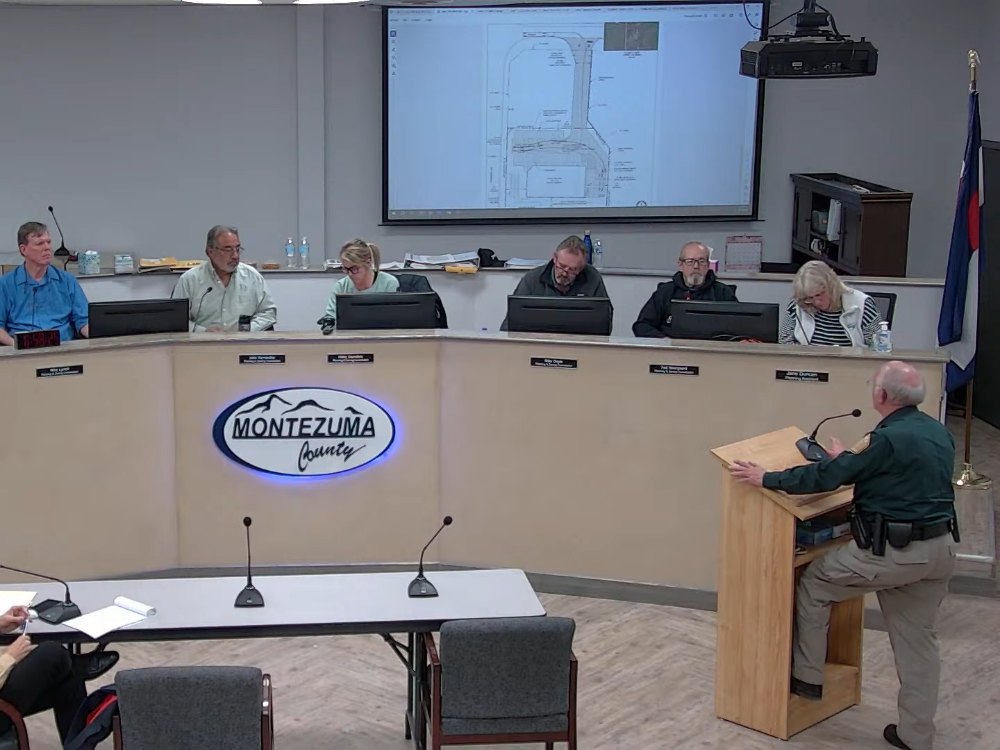 Image: Montezuma County meeting video. File image: Sheriff Steve Nowlin tells the county Planning and Zoning Commission on March 14, 2024, that traffic at Highway 145 and County Road N is “non-stop,” during the commission’s hearing on the store.
The county Planning and Zoning Commission voted 5-0 on March 14, 2024, to recommend denial. At that hearing, Sheriff Steve Nowlin told the commission that Highway 145 now has rush hours in both the morning and the afternoon and that school buses use both the highway and County Road N. Adding a store there, he said, “is going to cause congestion. It’s also going to cause aggravation with drivers who may take chances.” He said he was concerned about public safety at the intersection “because it is non-stop in that location.”
Kinsey told the commission that the store’s peak-hour traffic was too low to require a full traffic impact analysis under the state’s process. He said traffic counts were done because the Colorado Department of Transportation asked for them, and that nothing in them showed a hazard. He also said the store’s entrance would be widened after an official he met with raised concerns about accidents.
County commissioners held a hearing on April 23, 2024, and on April 30 voted 2-1 to deny the permit. Commissioner Gerald Koppenhafer made the motion and Commissioner Kent Lindsay seconded it. Chairman Jim Candelaria voted against the denial.
Leaf sued. On April 11, 2025, the district court sent the case back to the commissioners to fix two due process problems. Leaf had not been given a chance to respond to documents the public submitted during public comment, and the board had not issued a written decision.
The board reopened the hearing on June 24, 2025, and continued it to July 8. At the end of the July 8 hearing, Lindsay read his reasons into the record. He said the intersection had been rebuilt years ago “because of the number of accidents along that section of the highway and traffic has been increasing ever since,” and that the store would add delivery trucks as well as customers’ cars. He described a broadside crash four days after the board’s first decision, between a car that pulled out into the highway and a van full of children. No lives were lost, he said. He said a chain store “does not align with the community’s desire to maintain beauty and rural character” in the area.
He then moved to deny the permit on the grounds of public safety, traffic hazards, fire safety concerns, and a disruption of local identity that, in the minutes’ words, “far outweighs the benefits of chain boxed stores, especially when alternative retail options exist nearby.” The vote was again 2-1, with Lindsay and Koppenhafer for denial and Candelaria against.
After the vote, Kinsey told the board that the fire marshal was not opposed to the project and was satisfied with the response time and the water storage planned for the site. “CDOT is fine with that intersection and this use,” he said.
Commissioners adopted the written decision, Resolution 10-2025, on July 22, 2025. It lists 11 findings. Among them: the 678 daily trips and the public’s testimony about the danger of the intersection and driveway, the lack of similar commercial uses nearby, harm to the values of surrounding rural properties, and an “unacceptable risk of fire danger” because the site sits at the edge of the Dolores and Cortez fire districts. It found that the underground water tank Leaf proposed would not make up for the slow response times. Its conclusion rests the denial on “significantly increased traffic and associated fire danger.”
What the district judge decided
Leaf went back to district court, and District Judge Todd Plewe of the 22nd Judicial District ruled for the county in early July. Tarnowski told commissioners on July 14 that the judge denied Leaf’s motion for summary judgment and its appeal of the board’s decision. He called it “the best possible outcome for the board” and said the board “prevailed on all of the arguments that were made.”
The Journal, which reviewed the order, reported that the judge found the traffic finding enough on its own to support the denial. It reported that he did not accept several of the board’s other reasons, including the fire danger and the site’s rural character.
The judge also had harsh words for the county’s code. Tarnowski read them to the board: the code “is contradictory in places and contains inconsistencies,” and “arguably the code is poor public policy.” The court upheld the code against Leaf’s challenges, he said, but “was also pretty transparent that in the eyes of the court there is room for improvement.”
The county is already changing its code
Since that ruling, the county has started changing the rules the case exposed.
- Written comments at hearings. On Oct. 20, commissioners adopted new hearing procedures that stop the public from handing written material to the board during a hearing. Tarnowski said the rule answers the due process problem the court found in the board’s first hearing on the store. The Current reported on the change here.
- “Use by right.” At an Oct. 5 workshop, Tarnowski brought a draft that replaces “use by right” with “allowed use” throughout the code and states plainly that an allowed use still needs a high impact permit to exceed a threshold standard. The Current reported on the draft here. On Nov. 24, Tarnowski said that technical update, which he described as addressing “the district court’s comments about the code,” should come back to the board before long. No change to the code can take effect without a public hearing.
The county also brought in outside help for the case in November 2024. Commissioners voted to hire attorney Lance Ingalls of the firm Icenogle Seaver Pogue for what the minutes call “specialized legal services for the Dollar General Land Use case.”
What happens next
After Leaf’s reply brief, the case goes to a panel of Court of Appeals judges. They can uphold the district court’s ruling, reverse it or send the case back. Whichever side loses can then ask the Colorado Supreme Court to take the case, which that court is not required to do.
Until the appeal is decided, the county’s denial stands and no store can be built under this application.
Sources
- Montezuma County Resolution 10-2025, recorded July 22, 2025
- County commissioner minutes: 2024, 2025, 2026
- Montezuma County Land Use Code
- County meeting recordings: March 14, 2024 Planning and Zoning hearing, July 8, 2025 commissioners’ hearing, commissioners’ meetings of July 14, July 28, Oct. 20 and Nov. 24, 2026
- The account of which findings the district judge accepted is The Journal’s: Judge upholds Montezuma County commissioners’ denial of Dollar General permit