Dolores planners adopt an outline for the comprehensive plan
The Planning and Zoning Commission voted on Nov. 3 to use the consultant's March outline as the draft table of contents, agreed the plan should run about 40 pages, and continued the meeting to Nov. 17.
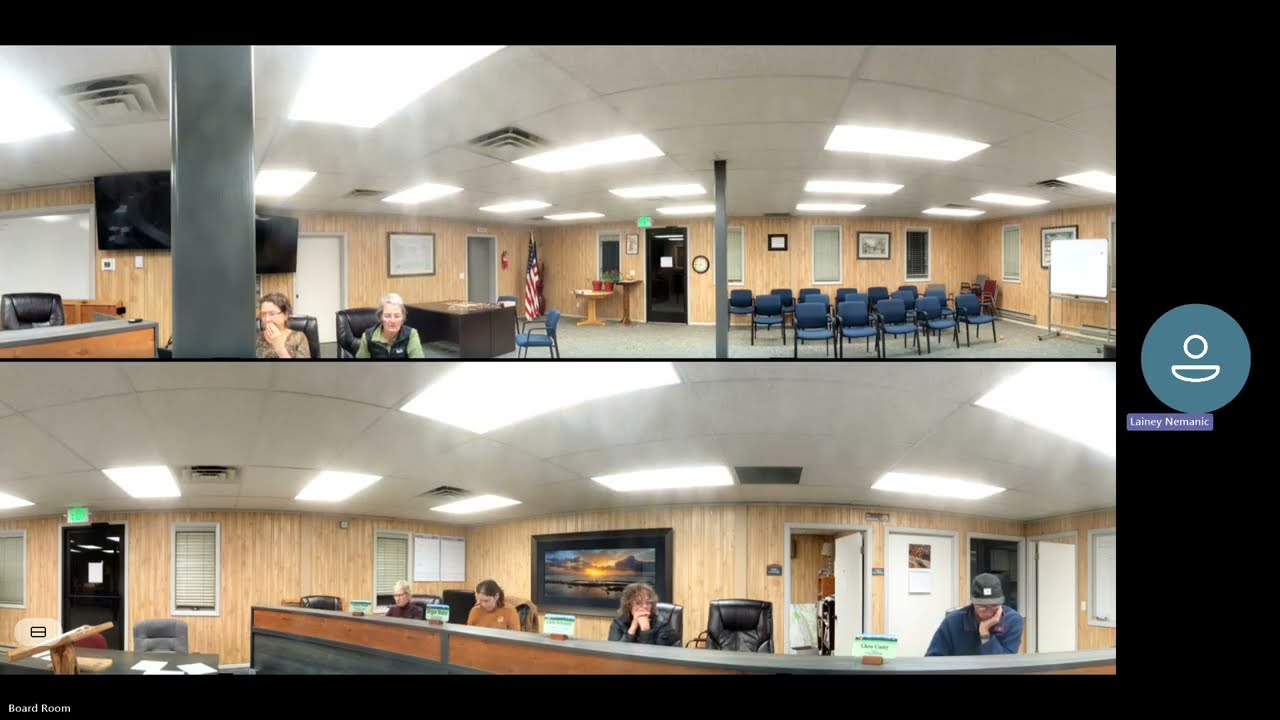
The Dolores Planning and Zoning Commission has settled on a skeleton for the town’s new comprehensive plan, voting unanimously on Nov. 3 to adopt an outline prepared by the town’s consultant as the plan’s draft table of contents.
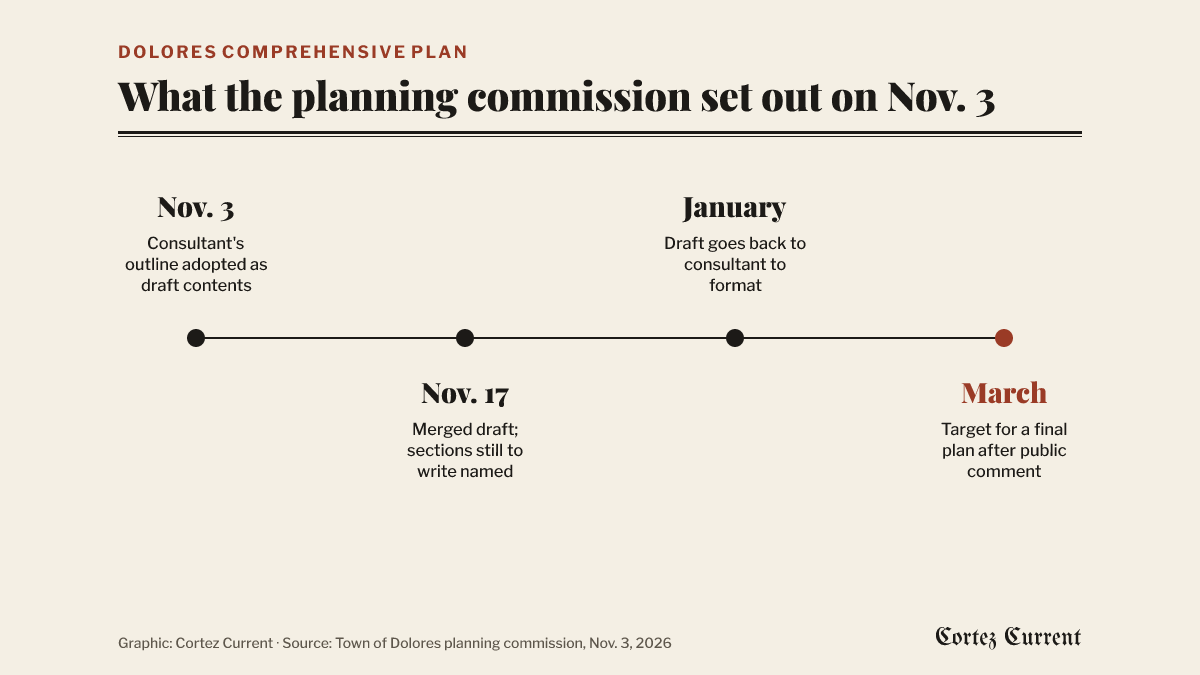
Graphic: Cortez Current. Source: Town of Dolores planning commission meeting, Nov. 3, 2026
The vote, recorded on the town’s own video of the meeting, ends months of circling over competing drafts of a contents page. It leaves the commission with one framework to fill in, and a timetable: a merged working draft before its next meeting, the sections written over the winter, and a finished draft handed back to the consultant in January.
The commission then continued the Nov. 3 meeting to Tuesday, Nov. 17, at 6:30 p.m. at Town Hall, 601 Central Ave. — the continuation the town announced in a public notice three days later. Planning commission meetings are open to the public.
A comprehensive plan is a town’s long-range statement of how it wants to grow and what it wants to protect. It does not by itself change any rule, but it is the document the town points to when it later writes zoning rules or decides a development application.
The vote
The outline the commission adopted was prepared by Logan Simpson, the planning firm working with the town, and is dated March 27, 2026. One commissioner moved to approve it “as the draft table of contents,” another seconded, and the motion carried on a voice vote with no opposition, including a commissioner taking part remotely.
Commissioners said the outline’s main virtue is that it is the version the public has already seen: the town’s engagement survey was built around it. Changing it substantially, one said, would mean the finished plan no longer matched what residents were asked about.
Alongside it the commission worked through a second document, a one-page list of “themes and context” assembled by one commissioner from comments the others had given her. The commission’s direction was to merge the two — the outline as the structure, the themes list as notes on how each part should read.
What the plan is supposed to look like
Most of the meeting was spent agreeing on tone rather than content. The points commissioners settled on:
Keep it short. The consultant told the commission a comprehensive plan of this kind typically runs about 40 pages. Commissioners adopted that as a working target rather than a rule — one said that if the draft reaches 60 pages, “I recommend we reassess.” Several said the way to keep the main text short is to push background material into appendices, which they agreed should have no page limit.
Write it affirmatively. Commissioners agreed the language should say what the town intends to do rather than what it cannot do, and that the plan should read as a forward-looking document.
Stay in the town’s lane. The plan is to stay focused on what a Colorado municipality is actually responsible for — streets, utilities and the other duties state statute assigns — rather than on aspirations outside the town’s jurisdiction.
Name other organizations, don’t describe them. This was the one point with real disagreement. Commissioners said residents often confuse what the town does with what the chamber of commerce, the library or the county does, and that the plan should help sort that out. But describing those organizations in the plan would both risk getting it wrong and go out of date quickly. The agreement was to reference each by name with a link to its own website, as briefly as possible, and to point readers at the residents’ resources page already on the town’s own site.
History goes in an appendix. Existing town plans, a history of planning in Dolores and a proposed list of projects completed since the 1997 comprehensive plan were all moved to the appendices rather than the body.
What comes next
At the Nov. 17 meeting the commission expects to take up the merged draft and start identifying which sections still need to be written. The consultant told commissioners that parts of the draft already exist, but that the water-resources section the state requires, and the land-use material, still have to be written.
The timetable the consultant described: finish the commission’s draft around January, hand it over to be formatted, put it back out for public comment, and reach a final document in March.
Two practical obstacles came up. Town staff suggested the commission work on the document through SharePoint, the platform the town already uses, so everyone can see and make comments in one place. Commissioners pointed out that they have no town-issued tablets or laptops the way trustees do, that one commissioner’s own computer is too old to run it, and that the room’s screen is hard to read from the dais. No decision was made beyond agreeing to work the problem out.
The town manager also told commissioners she would check with the town’s lawyer about the commission’s practice of discussing the plan one-to-one outside meetings, after a commissioner raised it. The direction agreed in the meeting was that the merged draft would go from the commissioner preparing it to the town manager, who would circulate it to everyone at once — the same way the Board of Trustees works — with the commission chair kept in the loop.
Who was there
Four of the commission’s five voting members were present, one of them remotely: Chairperson Linda Robinson and commissioners Shirley Powell, Megan Mustoe and Lainey Nemanic. Mayor Pro Tem Chris Curry sat as the board’s ex-officio member and Town Manager Leigh Reeves attended for staff. Two members of the public joined online; neither spoke.
The commission’s second ex-officio seat is vacant. Trustees are due to fill the town’s open trustee seat at their Nov. 23 meeting, and commissioners expect whoever is appointed to take that seat at the commission’s Dec. 1 meeting.
The meeting is on the Town of Dolores YouTube channel. The town’s recording does not carry captions for the first six minutes, which were before the meeting was called to order.