Colorado pauses mandatory courtroom livestreams, citing harassment and disruptions
A directive from the chief justice lifts the default for 90 days, through Dec. 14. Courtrooms stay open, and judges can still choose to stream.
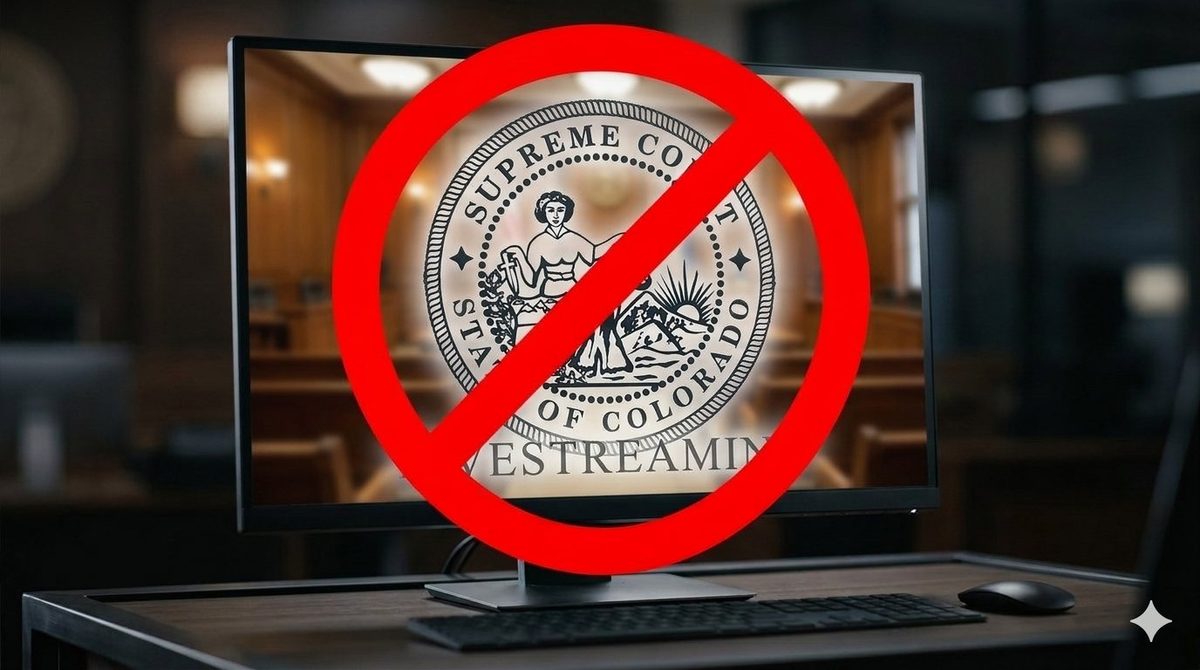
DENVER — Colorado’s chief justice has temporarily suspended the state’s default requirement that criminal proceedings in trial courts be livestreamed, citing unauthorized social-media recordings, harassment of participants and repeated disruptions of online hearings.
Chief Justice Directive 26-01, signed by Colorado Supreme Court Chief Justice Monica M. Márquez, took effect Sept. 15 and is scheduled to expire Dec. 14.
The order is not an outright ban. Instead, it removes for 90 days the presumption that judges must livestream criminal proceedings. Judges may continue offering a livestream if they decide the benefits outweigh the risks in their courtrooms.
Physical courtrooms remain open to the public, and the directive does not prevent defendants, attorneys, witnesses or victims from participating through Webex or another videoconferencing platform. It also leaves Colorado’s process for media organizations to request camera access unchanged.
Márquez said livestreaming, initially intended to make courts more accessible, has increasingly been used for “disruption, disparagement, harassment, and private economic gain.”
According to the directive, people have recorded proceedings despite warnings that doing so is prohibited and then uploaded the footage to YouTube, TikTok, Instagram and Facebook. The Judicial Department says it knows of hundreds of such videos on YouTube alone, including content posted on monetized channels.
Some recordings have been edited or paired with commentary ridiculing defendants, witnesses and other courtroom participants. In one example cited by Márquez, testimony from a sexual-assault victim was posted online with the victim’s full name.
The chief justice said unrestricted online access can also make it easier to violate witness-sequestration orders, expose participants to intimidation and complicate efforts to seat an impartial jury.
A separate but related problem involves outsiders entering virtual proceedings while pretending to be attorneys, interpreters or other authorized participants. The intruders have displayed pornography, racist imagery and videos depicting graphic violence, sometimes forcing judges to stop hearings.
The Colorado Judicial Department reported at least 28 such incidents during the first half of 2026, according to KRDO reporting published in July. The department has been testing CourtCall, a platform designed specifically for judicial proceedings, in courtrooms across several counties as a possible alternative to Webex.
The pause creates a potential legal and constitutional tension between the judicial and legislative branches.
A 2023 Colorado law generally requires courts to provide free, real-time remote access to criminal proceedings held in open court. Judges may limit that access in certain circumstances, including when livestreaming threatens someone’s safety, a defendant’s right to a fair trial or a victim’s rights and no less restrictive alternative is available.
Lawmakers strengthened the access provisions in 2026, specifying that the statutory requirements supersede conflicting judicial guidance or chief justice directives. Márquez nevertheless concluded that the problems exist statewide and collectively satisfy the law’s exception. She also invoked the Colorado Supreme Court’s constitutional authority to administer the state court system and protect the integrity of judicial proceedings.
Open-government advocates have cautioned that suspending default livestreams will make court coverage more difficult, particularly for residents and journalists who cannot travel long distances to attend hearings. Jeffrey Roberts, executive director of the Colorado Freedom of Information Coalition, told Colorado Public Radio that remote access helps journalists monitor multiple courts and keep the public informed.
During the pause, the Judicial Department plans to consider stronger technological safeguards, additional staff training, new courtroom procedures and possible legislative changes.
The central question is whether officials can prevent abuse without permanently sacrificing the public access that livestreaming was designed to provide. Unless the directive is extended or replaced, the statewide presumption favoring livestreams will return Dec. 14.